
“For more than two decades now I’ve lived alongside the pelicans of the Prespa lakes in northern Greece. These birds are—for so many, residents and visitors alike—simply an astonishing and seamless part of being here. There is no Prespa without pelicans. In summer, the skies brighten with their flights, as hundreds of birds, their wingspans as great as three and a half meters when fully extended, catch warm thermals generated by the earth, tracing rising circles into the endless blue above. Or they’ll skim so close to the lake that they’re doubled as if in a mirror, held there by a phenomenon known as ground effect, when an invisible cushion is created by air flowing into the space between a bird’s wings and the surface of the water. Even when you know the science behind what holds them in place, the sheer poetry of the motion feels like they’re suspended solely by a spell.”
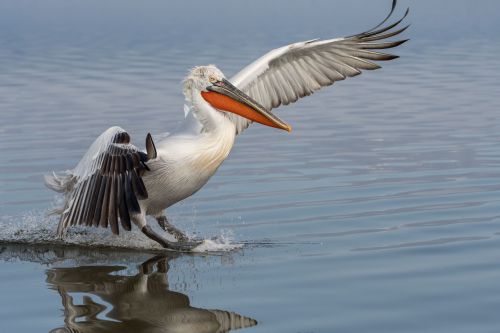

The above paragraph is an excerpt from a new essay of mine on Prespa’s pelicans published this week. Until earlier this year, the colony of Dalmatian pelicans on Lesser Prespa Lake in northern Greece was the largest on Earth, numbering some 1,400 pairs. But in late winter and early spring, avian influenza spread through the wetland and their nesting islands with frightening speed, killing large numbers of these rare and remarkable birds, as a wave of viral outbreaks have decimated other wild bird populations elsewhere in the northern hemisphere. Living this close to the lakes, the presence of pelicans will never fail to stir me – and seeing so few of them around Prespa this year was a poignant reminder of just how much we have to lose in this world.
I’m deeply grateful to Emergence Magazine for giving me the opportunity to tell the story of Prespa’s pelicans and avian influenza in an essay called The Spirit of the Wetlands, in which I also explore the enormous capacity we have for transforming our cultures and the wider implications and possibilities for health when we see ourselves as inseperable from the natural world, given that highly pathogenic avian influenza is directly traceable to human food production systems.
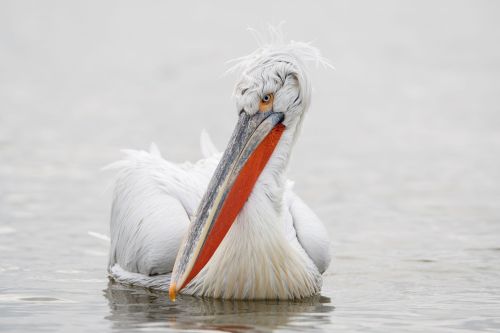
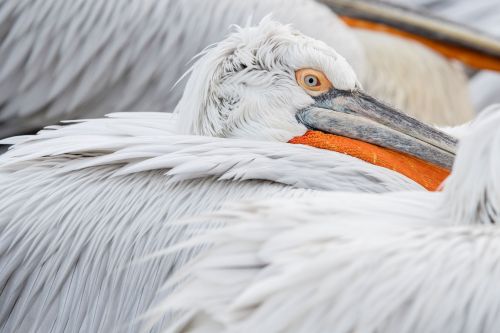
With immense thanks to the conservationists, avian influenza specialists and local fishermen who shared their knowledge and perspectives with me, helping me understand how everything in this world is interconnected. The full essay is freely available to be read online or listened to in a podcast version here or via the links above. Dalmatian pelican images in this post are courtesy of the Society for the Protection of Prespa and photographer Francisco Márquez.


Discover more from Julian Hoffman
Subscribe to get the latest posts sent to your email.


 Julian Hoffman
This, and the article you have linked here, is both thought-provoking and shocking. We briefly met you in May when we were part of one of Mark Cocker’s groups exploring Lake Prespa. What we learnt then about avian flu and its effects was shocking enough, but it seems it has got worse. Fighting such powerful viruses seems to have become a new battleground in a difficult world.
Hello Margaret – I remember meeting you here in Prespa very well! Thanks for this thoughtful comment. It’s been truly shocking watching the collapse of the Dalmatian pelican colony up close, and to see how widespread and devastating this year’s avian influenza outbreaks have been. It’s going to require a wide spectrum approach to even begin to respond to. I hope you and yours are keeping well, and that our paths cross again some day. Best wishes from here – Julian
Hi Julian
Very distressing to read of this further impact of avian flu.
I hope you are keeping well, despite the avalanche of bad news?
Warmest good wishes
Paddy
Paddy Woodworth Research Associate, Missouri Botanical Garden, St Louis. Adjunct Senior Lecturer, School of Languages and Literatures, University College, Dublin. Author, journalist, lecturer, cultural/environmental tour guide. http://www.paddywoodworth.com http://press.uchicago.edu/ucp/books/book/chicago/O/bo8312323.html
+353 (0)86 8120842 22 Manor Place
StoneybatterDublin 7Ireland
EIRCODE D07 X7H2
Hi Paddy – really good to hear from you, and hope all is well with you and yours. Yes, it’s been a difficult breeding season in the wetlands. But inspiring, too, how communities can work together to make a difference. All fingers now crossed for the Dalmatian pelicans that will begin arriving in January to nest. Warmest wishes from here – Julian
Dear Julian,
Thank you so much for your essay, which is much more than a simple report about the outbreak of avian flu at Prespa in spring 2022 but also widens the heart for a different understanding to what it means, when species disappear.
My husband and I visited the lakes in summer 2013 for the first time on a trip across the mainland of Greece. We stayed only for one night at Psarades, as our focus was on a boat tour on Great Prespa Lake. Despite the short time we were fascinated by the Dalmatian Pelicans, especially as we went out on the lake in one of these small fishermen’s boats where you sit just on top of the waterline the same as they do. There and then I understood the beauty of these special creatures and the environment they live in.
I could never forget this special ride, so we returned in May 2024 and found out of what had happened. It is such a tragedy and to be there and see the emptiness on the lake filled my heart with a deep sadness.
Only when I came back home to Germany I found your essay and read it over and over again. Let us hope that despite all adversities the pelicans, this old species, will survive and remain with us.
If you like I got the photos from 2013 and 2024 on my homepage:
2013: https://www.kritimou.de/kritimou/juli13/11pres2.htm and https://www.kritimou.de/kritimou/juli13/12pres3.htm
2024: https://www.kritimou.de/kritimou/mai24/02prespa.htm
After your impressive essay I am looking forward to reading The Small Heart of Things.
Thank you again and all the best to you
Christine
Dear Christine,
Thank you ever so much for this wonderfully kind and generous comment of yours. Firstly, I’m so pleased you enjoyed this essay, despite the difficult subject that it covers. Secondly, I’m delighted that you’ve had the chance to explore Prespa. Yes, that boat right out to the hermitages, when you pass pelicans, cormorants and egrets at eye-level is just stunning! I really enjoyed looking at your photographs of the region yesterday as well. Beautiful.
The good news regarding Dalmatian pelicans is that for the past two breeding seasons around 600 pairs have nested on Lesser Prespa Lake. Far more (especially in the year directly after the avian influenza outbreak) that were expected to be honest. It seems that the conservation success over the past few decades meant that there were quite a few non-breeding Dalmatian pelicans that have now taken the opportunity of greater nest availability to breed as well. And, just as importantly, there has been no recurrence of avian influenza. Our fingers are crossed, but it’s believed that the colony has now stabilised and will hopefully slowly grow again.
Thank you very much as well for your interest in my books. My upcoming book (to be published in May) is largely all about Prespa and contains a reworked and updated version of the pelican essay as one of its chapters. In case you’re interested, it’s called Lifelines: Searching for Home in the Mountains of Greece. Here’s a link to it for more information: https://eandtbooks.com/books/lifelines/
Many thanks again for your kind message and I hope you’re well.
Warmest wishes,
Julian